THE RUNT & LOWER RUNT (Rock Shox ZEB only right now)
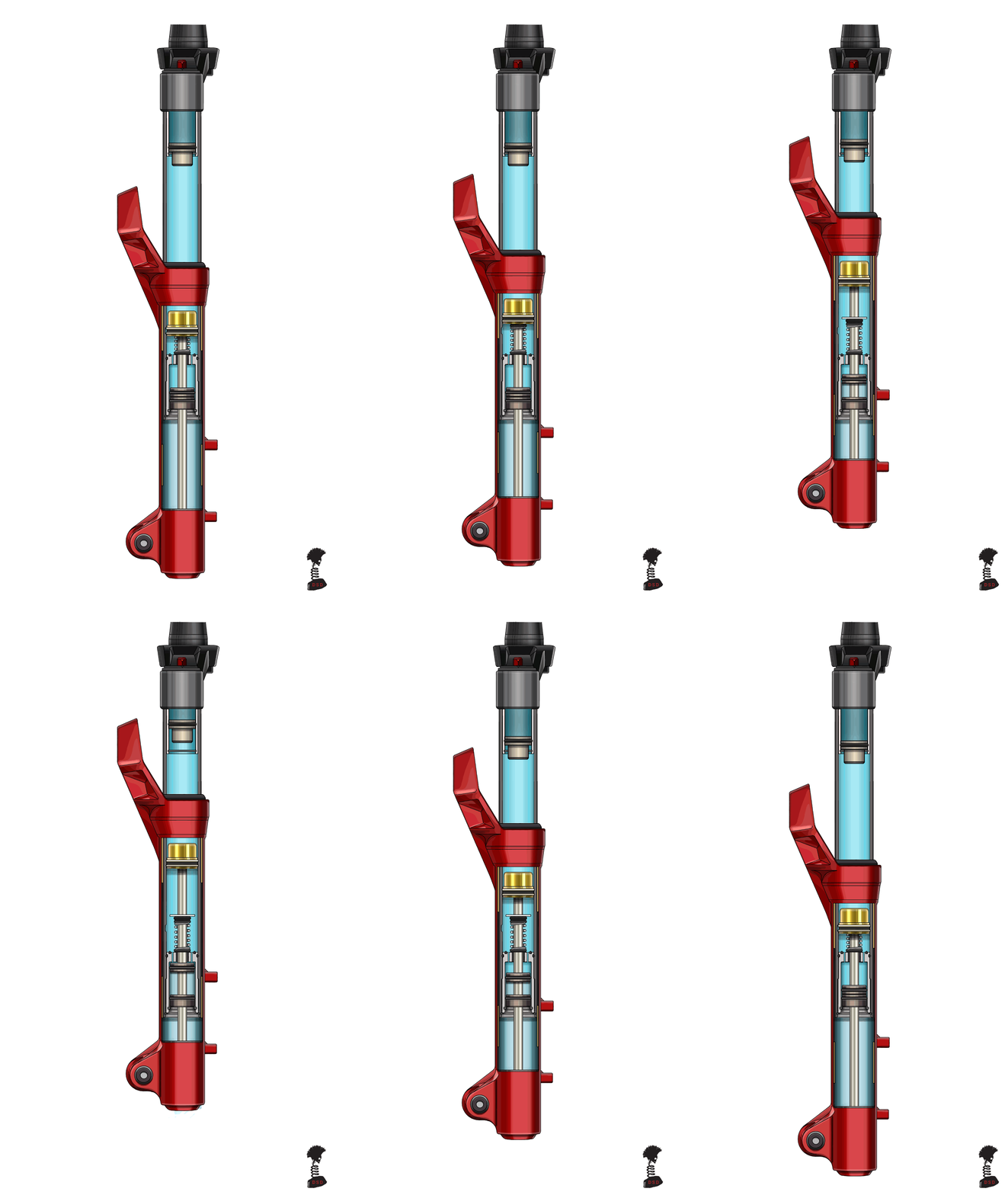
We bring you the Next DSD patent pending air spring. The most advanced / Adjustable spring on the market. It is the only air spring capable of duplicating a coil fork spring rate from the vary beginning to the end. The advantage over a coil is infinite spring rates and less weight.
It features the first and only air spring with adjustable preload that truly mimics a coil but gives you the advantage of infinite spring rates / Adjustable Negative air volume / Reduced progression in Lowers.
ADJUSTABLE PRELOAD
Preload is adjusted by adding or subtraction shims above the negative coil spring. Preloading the negative coil spring produces a positive preload in the spring rate. A positive preload eliminates the mushy initial feeling most current forks have. It eliminates the dead spot forks have at the beginning of the travel and actually makes the fork feel more supple.
Adjustable Negative Air Volume
Negative air volume is adjustable with spacers below negative floating piston. Hollow in the middle they let you tune negative air volume with out having a big impact on progression in the lowers.
Floating Negative Air Piston increases air volume in lowers
The floating negative piston reduces pressure build up in lowers and vacuum forces being pulled on main air piston. Allows you to use more negative air volume with out decreasing air volume in lowers. Reduces progression so that you can choose how much progression you want with the High chamber in Runt .
PRELOAD TEST / PRELOAD ADJUSTMENT
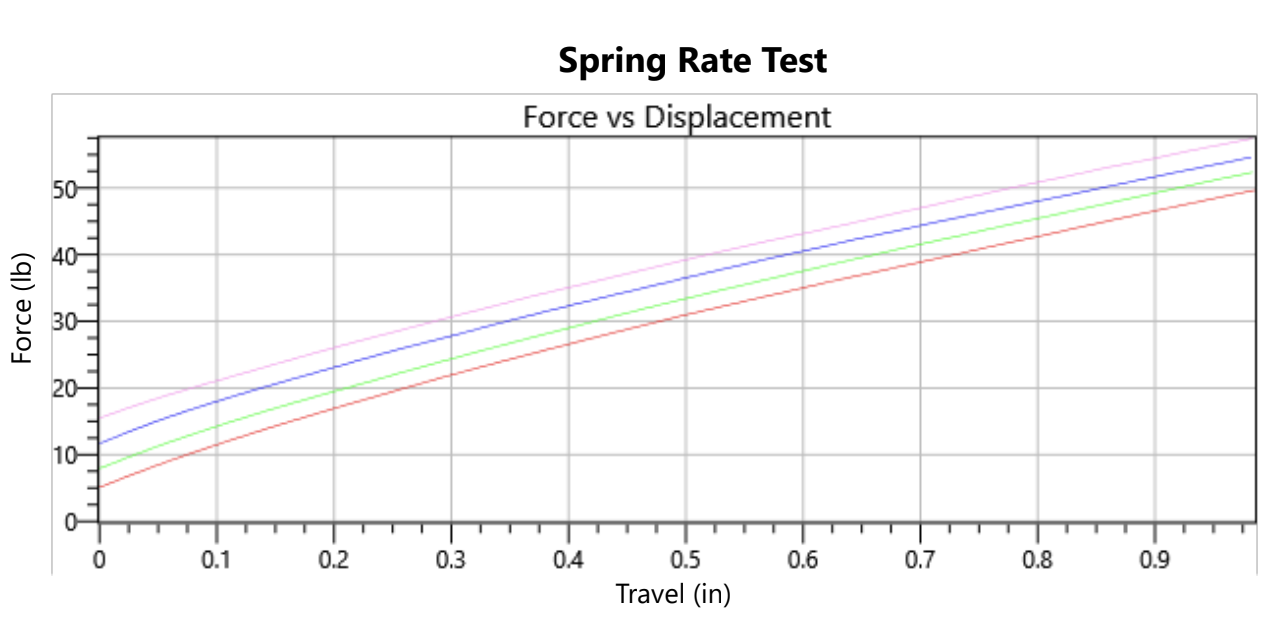
THE FIRST AND ONLY AIR SPRING THAT OFFERS ADJUSTABLE PRELOAD
The preload is adjusted by 1mm shims that go above the coil spring.
Red = 1 shim Approx. 5-6 LBS
Green = 2 shims Approx. 8-10 lbs.
Blue = 3 shims Approx. 10-12 lbs.
Pink = 4shims Approx. 15-16 lbs.
Preload is important and when the proper amount is used it actually makes the fork feel more supple. It is what gives the bike a light poppy feeling without being harsh.
If you are on a heavy bike more preload will make it feel lighter and more playful with out adding harshness.
If you are on a longer bike more preload will make it easier to lift without having to run high pressures.
If you are having trouble using full travel preload will allow you to use lower air pressure with out loosing support or lift allowing you to use more travel.
(preload test done with runt at 50 psi Low 100 psi High. 2 negative volume spacers. No lowers installed on fork. at 1 inch stroke )
NEGATIVE VOLUME SPACER TEST
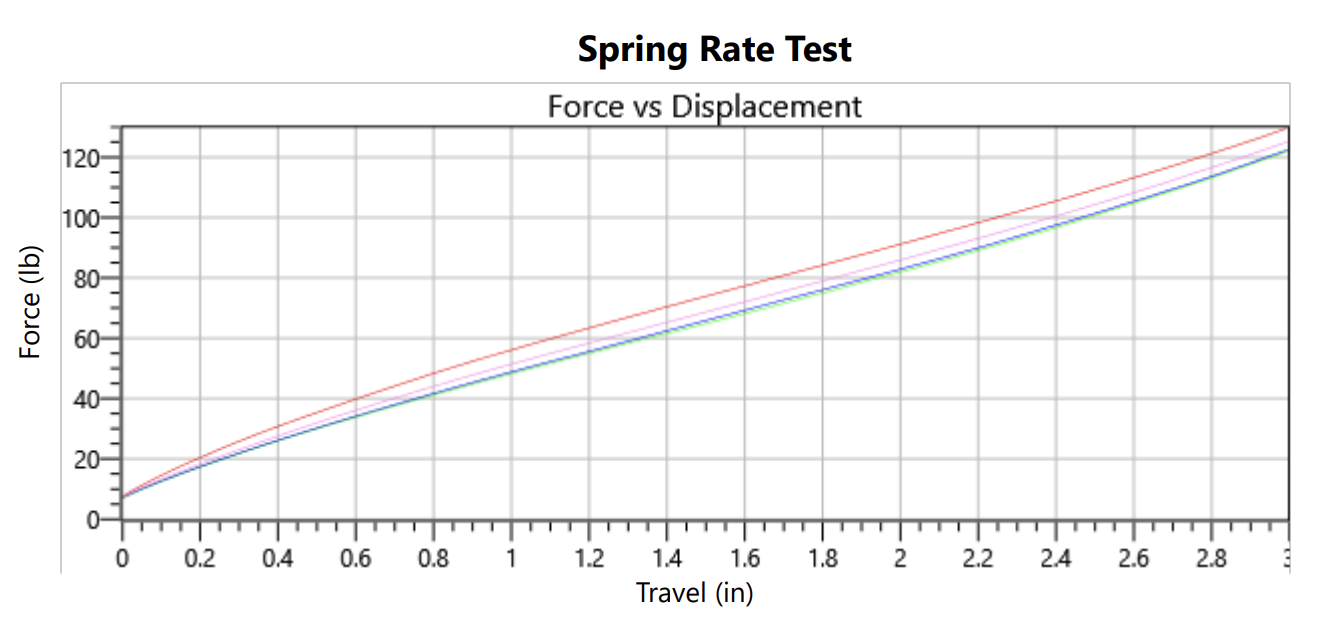
Negative air volume is adjustable with 3 Spacers.
Red = 3 Negative spacers
Pink = 2 Negative spacers
Blue = 1 Negative spacer
Yellow = 0 Negative spacers. (Hard to see not much of a difference from 1 spacers. May increase piston noise as spacers help cushion piston)
Suspension company’s have marketed massive negative air chambers to achieve a more linear mid stroke. However by doing so the initial support gets compromised making it mushy and unsupportive.
I knew that the only way I could convince riders that less negative air is better was to be able to offer more negative air as an option so that they could make the choice for themselves. This system allows you to use the amount of negative air volume that you prefer.
Lighter to average riders that are struggling to use full travel of their fork can benefit from less negative air volume. This may be counter intuitive but increasing the initial support allows use of lower air pressure which then decreases the progression later in the stroke. Lowering the air pressure also keeps the fork feeling supple.
Larger riders / Heavier bikes can benefit from less negative air pressure as well. Increasing initial support keeps the bike riding higher and makes heavier weight feel lighter increasing the poppy lively feeling of the bike.
(negative volume test done with runt at 50 psi Low 100 psi High. 2 preload shims. No lowers installed on fork at 3 inch stroke.
LOWER PRESSURE TEST / Negative Floating Piston
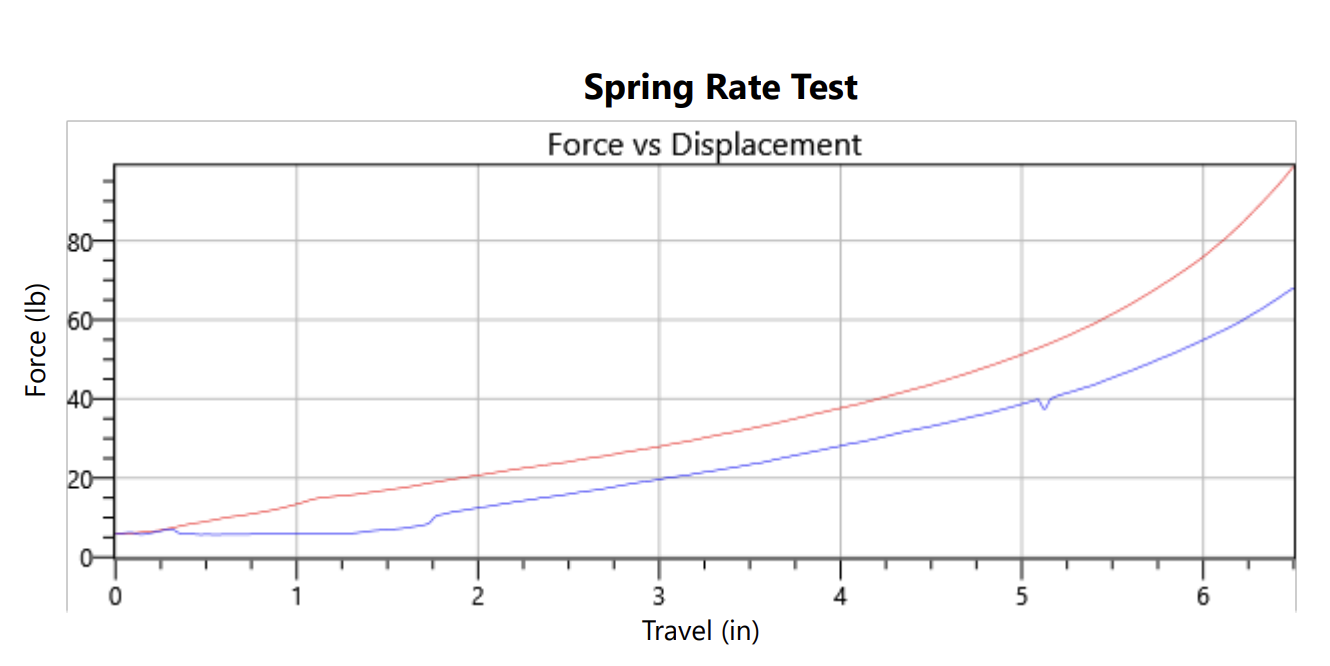
This test shows the difference in pressure force between a stock air spring and the Lower Runt with floating piston.
Red = Stock “butter cup air spring”
Blue = Lower Runt with floating piston
The floating piston in the negative chamber reduces progression in the lowers no matter what amount of negative air volume you decide to run. This allows you to adjust the progression you want by changing the High pressure in the Upper Runt.
This makes the High chamber in the runt much more usable to adjust progression with out having to compromise your mid stroke support.
The floating negative piston increases the air volume in the lowers by floating upwards. This also decreases the spring rate produced from the vacuum below the main air piston. (if you ever serviced a fork and pushed the air spring shaft into the uppers without a top cap installed the force your feeling is the vacuum pulling the piston back down)
(Lower casting progression test done with No top / Runt. No damper in opposite leg. 15cc of oil. 6.6” Stroke. butter cup installed on stock shaft. Butter cup removed on Lower runt) The butter cup is removed because we felt much benefit from it, It takes up volume in lowers, allows use of negative spacers, and keeps travel height of fork consistent after changing spacing of main piston seal to transfer port.
Upper and Lower Runt Combined
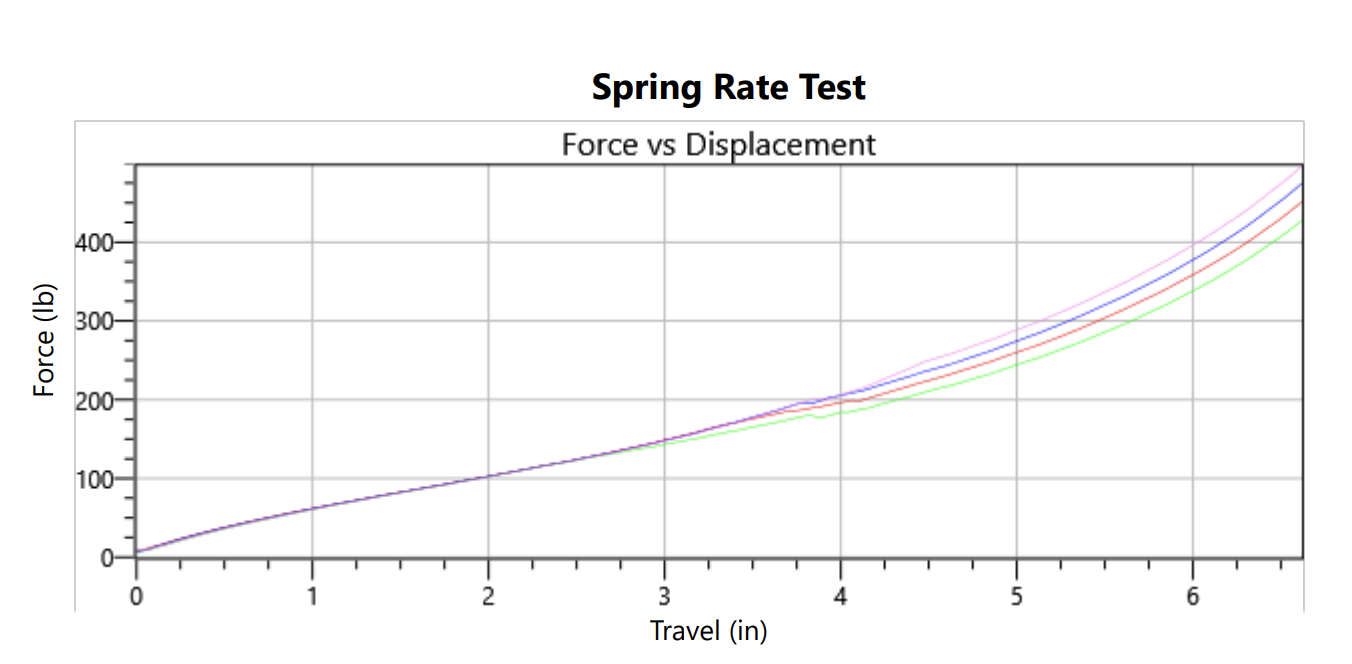
This test shows both the Upper and Lower Runt combined and how progression / bottoming resistance can be tuned.
Green = 50psi L 80psi H
Red = 50psi L 100psi H
Blue = 50psi L 120psi H
Pink = 50psi L 140psi H
Progression is adjusted by changing air pressure in the upper Runt high chamber. After reducing the progression in the lowers the Upper Runt progression adjustment becomes much more useable. Allowing you to chose how much bottoming resistance / progression you want.
A little known fact amongst the general public is that every coil fork is progressive and has some kind of air chamber “ air spring” and or hydraulic bottom out feature. I am not aware of any fork with a completely linear spring rate once everything is assembled.
Dirt bikes and some early mountain bike forks adjusted progression / “air spring” with oil height / oil volume. The “air gap” is probably the best term i’ve heard used.
To adjust the progression / bottom out you add or subtract oil changing the air volume being compressed and when doing so it changes about the last 1/3 of the travel. I would say is is closely related to the air volume in the lowers of an air fork.
There are current coil forks on the market where the uppers and lowers are sealed to build progression in the lowers. technically not adjustable but changing the amount of oil in the lowers will influence it.
(Upper and Lower Runt testing done with 2 preload shims, 2 Negative air spacers, 15cc of oil in lowers, and 6.6” stroke")